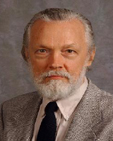
William Chittick
· SUNY Distinguished Professor | Director, Program in Religious StudiesVerifiedStony Brook University · Asian and Asian American Studies
Active 1966–2025
About
William C. Chittick is a Distinguished Professor in the Department of Asian & Asian American Studies at Stony Brook University. His research focuses on pre-modern Islamic intellectual history and its relevance for contemporary humanistic concerns.
Research topics
- Political Science
- Ancient history
- History
- Literature
- Philosophy
- Theology
- Art
Selected publications
Farghānī (d. 699/1300) on Waḥdat al-Wujūd in the Four Journeys
Journal of Sufi Studies · 2025-05-20
article1st authorCorrespondingAbstract Saʿīd b. Aḥmad Farghānī (d. 699/1300) was one of the foremost students of Ṣadr al-Dīn Qūnawī, Ibn ʿArabī’s stepson and primary propagator. He was the author of the first commentary, in two versions, on Ibn al-Fāriḍ’s famous 760-verse qasida, The Poem of the Way . The first version was written in Persian, based on lectures delivered by Qūnawī, and the second in Arabic, with extensive additions and revisions. In the introduction to the Arabic, he provided relatively systematic expositions of many technical terms that were soon to become commonplace among scholars, among which was waḥdat al-wujūd , which had barely been mentioned before him. He also seems to be the first author to describe in detail the four journeys ( al-asfār al-arbaʿa ), an expression that is famously the short title of Mullā Ṣadrā’s magnum opus. In Farghānī’s understanding, waḥdat al-wujūd cannot be understood apart from the four journeys.
Oxford University Press eBooks · 2024-11-21
book-chapter1st authorCorrespondingAbstract Muslim philosophers who spoke of love identified it with the Necessary Existence. They considered it the motive force both for creation and for the return of all things to the origin. The Necessary Existence, they said, loves the sheer good and the absolutely beautiful, which is itself. By loving itself, it loves all possible things, which are nothing but its own radiance. Human beings for their part innately love the good and the beautiful and strive to achieve it. Sufi teachers who employed the same language agreed with the philosophical conclusions but insisted that people needed to follow in the footsteps of the prophets in order to actualize the goal of love, which is union with the Real Beloved.
Farghānī on the Muhammadan Reality
HORIZONTE - Revista de Estudos de Teologia e Ciências da Religião · 2023 · 3 citations
1st authorCorresponding- Philosophy
- Theology
- Literature
Perhaps the closest parallel to the Johannine Logos in Islam is found in the notion of the “Muhammadan Reality” (al-ḥaqīqat al-muḥammadiyya). The term was probably first used by Ibn ʿArabī (d. 1240), but the earliest detailed explanation of what it implies was provided by Saʿīd ibn Aḥmad Farghānī (d. 1300), an outstanding student of Ibn ʿArabī’s foremost propagator, Ṣadr al-Dīn Qûnawī. Farghānī wrote a dense, two-volume commentary on Ibn al-Fāriḍ’s famous 760-verse qasida, Naẓm al-sulûk. Deeply rooted in Islamic metaphysics, theology, and spiritual psychology, the commentary explains how the poet is describing Muhammad’s eternal archetype in God as both the means whereby God creates the universe and the ultimate returning place of all things.
The Spirituality of the Sufi Path
2022-11-26 · 1 citations
other1st authorCorrespondingThe Qur'an in the Thought of Ibn ‘Arabī
2021-08-12
book-chapter1st authorCorrespondingPaul Nwyia once wrote that the early Sufis were engaged in “the Qur'anization of memory,” a process that Ibn 'Arabi seems to have taken to its logical extreme. The foundation of Ibn 'Arabi’s teachings in one word is tawhid, the Qur’anic assertion that god alone is truly real and that all else is contingent upon him. Everything in the universe, in other words, is a “sign” (aya) or a “self-disclosure” (tajalli) of the truly “Real” (al-haqq), for created reality gives news of its Creator’s names and attributes. Ibn 'Arabi described the infinite variety of divine self-disclosures using the full spectrum of names and attributes employed in theology, philosophy, and Sufism. Ibn 'Arabi sees an explicit recognition of the Qur’an’s vision of simultaneous unity and multiplicity in its two primary designations: al-qur'an (that which brings together) and al-furqan (that which separates).
Mullā Ṣadrā’s Arrivers in the Heart (al-Wāridāt al-Qalbiyya)
Journal of Sufi Studies · 2021-12-14 · 1 citations
article1st authorCorrespondingAbstract It is increasingly difficult after Ibn ʿArabī (d. 638/1240) to differentiate the aims of the Sufis from those of the philosophers. Mullā Ṣadrā (d. 1050/1640) offers a fine example of a thinker who synthesized the Sufi and philosophical methodologies in his voluminous writings. In Arrivers in the Heart he combines the precision of philosophical reasoning with the recognition ( maʿrifa ) of God and self that was central to the concerns of the Sufi teachers. In forty “effusions” (fayḍ) of mostly rhymed prose, he provides epitomes of many of the themes that he addresses in his long books. These include the concept and reality of existence, the Divine Essence and Attributes, God’s omniscience, theodicy, eschatology, the worlds of the cosmos, spiritual psychology, divine and human love, disciplining the soul, and the nature of human perfection.
İbnü'l-Arabî: Entelektüel Geleneğe Açılan Kapı
Sufiyye · 2021-06-28 · 1 citations
articleOpen access1st authorCorresponding‘Entelektüel gelenek’ derken, aslî gayreti, eşyanın hakîkatine dair canlı bir farkındalık olarak anlaşılan aklı bilfiil gerçekleştirmek olan İslâmi ilim dalını kastediyorum. Geçmişe bakıldığında bu geleneğin üyeleri olarak sınıflandırılabilenler genellikle filozoflar ya da sûfîler olmuştur. Onlar tüm İslâmî öğretilerin -ve aslında, tüm dinlerin- nihaî amacının, insanların kalpte bulunan ilâhî imge olan kendi entelektüel ve mânevî doğalarını uyandırmak olduğunu savundular. Bu geleneğin en ünlü üyelerinden biri olan Gazzâlî, onun başyapıtı İhyâʾu Ulûmi’d-Dîn'in başlığında rolünü 'Dinî Bilgiye Hayat vermek' olarak özetliyor. İbnü’l-Arabî’nin Muhyiddin (Dine hayat veren kişi) olarak adlandırılmasının bu konuyla ilgisi yoktur. İbnü'l-Arabî'nin 'yaşayan mirasından' söz ettiğimizde, söz konusu hayatın kendisinden daha sonra gelenlere geçtiğini ve bugün de devam ettiğini ileri sürüyoruz. Bir miras 'yaşıyorsa', o zaman kesinlikle kitapların mirası değildir, çünkü kitaplar kendi içlerinde ölmüştür. Bir mirasın yaşamından söz etmek, sadece yaşayan ruhlarda bulunursa mantıklıdır. Öyleyse ne tür bir miras, en büyük ustayı Muhyiddîn ibnü’l-Arabî olarak adlandırabilir? Belki de İbnü’l-Arabî’nin doğumundan iki yüz yıl önce ölen ilk sûfî mürşidlerden biri olan Ebû Bekir el-Vâsitî'nin (ö. 932) bir sözünde kısa ve öz bir yanıt bulabiliriz: ‘Kendi başına yaşayan herkes öldü ve Hakk’la yaşayan ise asla ölmez.
Routledge eBooks · 2020 · 1 citations
1st authorCorresponding- Political Science
- Ancient history
- Political Science
Abū ‘Abdallāh Muḥammad ibn al-‘Arabī al-Tā’ī al-Ḥātimī is usually referred to as Muḥyī al-Dīn ibn ‘Arabī. He was born in Murcia in al-Andalūs on 17 Ramadan 560/28 July 1165 and died in Damascus on 22 Rabī‘ II 638/10 November 1240. 1 Known by the Sufis as al-Shaykh al-Akbar, “The Greatest Master”, he wrote voluminously at an exceedingly high level of discourse, making him one of the most difficult of all Muslim authors. His al-Futūḥāt al-makkiyyah, which will fill a projected thirty-seven volumes of five hundred pages each, is only one of several hundred books and treatises.
Routledge eBooks · 2020 · 15 citations
1st authorCorresponding- Political Science
- Ancient history
- Political Science
2020-08-07 · 2 citations
book-chapterOpen access1st authorCorresponding
Frequent coauthors
- 27 shared
Sachiko Murata
Stony Brook University
- 22 shared
Tu Weiming
Peking University
- 8 shared
Ahmad Sam’ānī
- 4 shared
ʿAllāmah Sayyid Muhammad Husayn Tabātabāʾī
- 3 shared
Leonard Lewisohn
Harvard University Press
- 3 shared
Glenn Alexander Magee
- 3 shared
Françoise Aubin
- 3 shared
Bernd Radtke
- Resume-aware match score
- Save to shortlist
- AI-drafted outreach
See your match with William Chittick
PhdFit ranks faculty by your research interests, methods, and publications — grounded in their actual work, not templates.
- Free to start
- No credit card
- 30-second signup